
- Refine search:
Generate a QR code
- Refine search:
School Age Vaccination and Immunisation Team
- Home
- Services
- School Nursing (0-19 Service)
- School Age Vaccination and Immunisation Team
Update
Did your child miss their chance to have their COVID-19 vaccination in school? Find details of where to get a vaccination for 12-15 year olds below.
Please note if you tested positive for COVID-19 you need to wait 12 weeks before you can have a COVID 19 vaccine. (This guidance changed following JVCI recommendation 15 November 2021)
The Sheffield Children’s 0-19 vaccination team have been making visits to schools to offer the COVID 19 vaccine for children age 12 to 15 years old.
Please check with your school if you are unsure whether we have visited already.
We are aware that some young people may have been absent from school when our team visited, and if this is the case they can drop-in to one of our clinics below:
- Becton Centre Sevenairs Road, S20 1NZ – In the East Wing – 21 December – 9am to 3.30pm (Please note this is a change of venue for the Sheffield Children’s Hospital)
If you would prefer to make an appointment, or discuss anything with the team please call 01143053230 or email our team on scn-tr.sheffielddutysn.vacandimm@nhs.net
Who we are
The School Age Vaccination and Immunisation Team consist of registered nurses and health care support workers who deliver the National School Age Programme of Immunisations in Sheffield. These programmes are delivered in schools and community based clinics which run throughout the year including school holidays. Pre-arranged home visits are also possible for children unable to receive their vaccines within the community. Your child’s school is notified of the date(s) that the Vaccination and Immunisation Team will be in school administering vaccines; these are usually sent to you from school, via email.
What are immunisations?
Immunisation makes sure that our bodies are best-protected against some serious diseases. It means that if we come into contact with certain diseases our bodies are better equipped to fight them off.
As a result of the UK’s National Immunisation Programme, a number of diseases have disappeared from the UK, such as polio. However, as they are still present in other countries, they could come back, so it is vital that we remain protected. Maintaining high immunisation rates means that we not only protect ourselves, but also our families and communities, and it helps to keep diseases at bay.
Vaccines
Do
- Protect you and your child from many serious and potentially deadly diseases
- Protect other people in your community – by helping to stop diseases spreading to people who cannot have vaccines
- They undergo rigorous safety testing before being introduced – they’re also constantly monitored for side effects after being introduced
- Occasionally cause mild side effects that will not last long – some children may feel a bit unwell and have a sore arm for two or three days
- They reduce or even get rid of some diseases – if enough people are vaccinated.
Don’t
- Do not cause Autism – studies have found no evidence of a link between the MMR vaccine and Autism
- Do not overload or weaken the immune system – it is safe to give children several vaccines at a time and this reduces the amount of injections they need
- Do not cause allergies or any other conditions – all the current evidence tells us that vaccinating is safer than not vaccinating
- Do not contain mercury (Thiomersal)
- Do not contain any ingredients that cause harm in such small amounts – but speak to the team if you have any known severe allergies
You can visit the NHS immunisation page for more information.
What vaccinations do the team deliver?
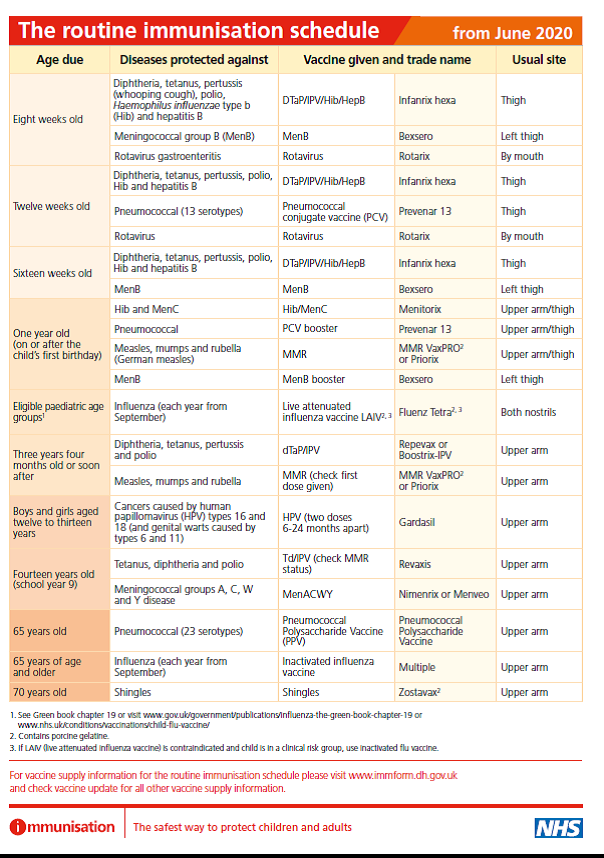
- Human Papilloma Virus (also abbreviated as HPV) in school years 8 and 9.
- Meningitis (ACWY strains) and 3 in 1 booster for Diphtheria, Tetanus and Polio in school year 9.
COVID-19 vaccinations for 12 to 15 year olds
The Health and Social Care Secretary has announced that young people aged 12 to 15 in England will be offered one dose of the Pfizer/BioNTech COVID-19 vaccine, following advice from the four UK Chief Medical Officers (CMOs). You can read the government announcement on the 13 September on the gov.uk website.
The main purpose of the COVID-19 childhood vaccination programme is to provide protection to the children who receive the vaccine and help to reduce transmission of COVID-19 in schools and keep pupils in the classroom.
Children aged 12 to 15 will primarily receive their COVID-19 vaccination at their school. Alternative provision is available for those who are home schooled, in secure services or at specialist mental health settings. Clinically vulnerable young people in this age group have previously been offered a vaccination at their local GP or hospital.
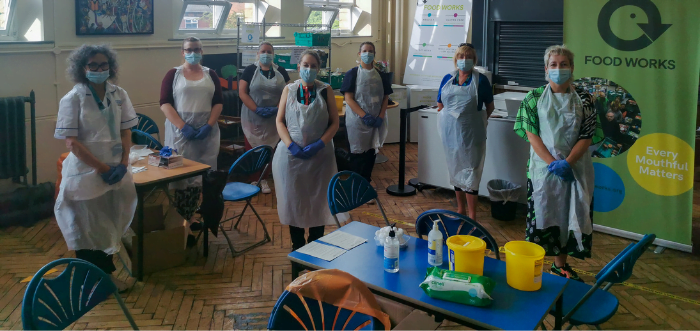
Like all school-based vaccination programmes, the vaccine will be administered by healthcare staff with appropriate qualifications who are trained in the vaccination of children and young people. They will also be wearing personal protective equipment, such as a mask, gloves and apron. Parental, guardian or carer consent will be sought by vaccination healthcare staff prior to vaccination in line with existing school vaccination programmes.
If you have any questions please contact your school in the first instance.
Consent
We need consent from a person with parental responsibility for a young person to receive their vaccination(s).
Young people aged 16 years and over are presumed in law to be able to consent to their own medical treatment.
We will always attempt to gain parental consent for vaccination but where the consent has not been responded too, we have a duty to determine whether the young person is competent to consent in their own right. If they’re believed to have enough intelligence, competence and understanding to fully appreciate what’s involved in their treatment (This is known as being Gillick competent), they may be able to consent to the vaccination themselves.
How do I give consent?
All young people who are eligible to receive a vaccination will be sent consent forms to their registered home address (addressed to the parent or carer) along with a return postage envelope. Please return the consent forms as soon as possible. Please note this includes all children including those not in a school setting or in alternative provision.
If you have changed address please let us know. You can also print the consent forms here and send them back to us.
- Consent Form Covid Vaccination (51.41 KB)
Declining vaccinations
If you do not want your child to receive the vaccination(s) please return the consent forms and fill in the refusal section, that way the young person will not be offered the vaccine. If you can tell us why that would be helpful too, as sometimes we may be able to offer support in other ways for your child.
It is really important that children receive the routine immunisation programme suggested by Public Health England. If you think your child has outstanding vaccinations not covered by the School Age Vaccination and Immunisation Team please contact your registered GP.

Director of Nursing announced as panellist on Child Safeguarding Practice Review Panel
Sally Shearer has been appointed as a panellist on the Child Safeguarding Practice Review Panel. She will serve from 1 July 2022 to 14 November 2025. Sally...
More about vaccination
Celebrating Pride at Sheffield Children’s
A message from Sheffield Children’s LGBTQ+ Equality Network Around the world, June is recognised as LGBTQ+ Pride Month to commemorate a tipping point in...
More about vaccination
Help to transform our extraordinary hospital into something even better.
Donate today

